Umbraco Spark 2026 took place on Friday 20 March at We The Curious on Bristol’s harbourside. A packed single-track schedule covering everything from upgrade decisions and cloud hosting to modern search and the future of the backoffice. Here’s my rundown, talk by talk.
Umbraco Search: A Developer’s Perspective
This one had a lot of energy. Kenn walked us through the upcoming Umbraco Search platform, a replacement for the current search setup, from a developer’s point of view. Live demos, real code, and a healthy dose of humour.
Umbraco Search looks genuinely powerful. The extensibility model looks well thought out, and the integrations with providers like Elasticsearch open up some exciting possibilities for building richer search experiences. I’m looking forward to getting my hands on it.
📦 Resources: GitHub repo from the talk
Umbraco Decisions: Stay, Upgrade, Rewrite
This is a talk that every Umbraco developer needs to hear at some point. With Umbraco 17 now out as the latest LTS, the question of what to do with existing projects is very real.
My key takeaway is: There is no universal right answer. Every project needs its own review, factoring in budget, integrations, risk tolerance, developer capacity and long-term business goals.
It’s also a reminder that upgrades aren’t purely technical decisions. Business priorities matter just as much as NuGet packages.
Tiny but Mighty: TinyMCE in Umbraco 17
TinyMCE is no longer the default rich text editor in modern Umbraco, but Fred made a strong case for why you might still want it. He walked through how to get up and running with the TinyMCE community package, including how to migrate without losing data, a concern I’d have when swapping out an editor.
If your editors love TinyMCE, there’s a clear path to keeping it.
📄 Resources: Slides (PDF)
Developers, Assemble! Community is Your Team’s Superpower
Joe made a compelling business case for community engagement in his lightning talk. Drawing on his experience organising the Bristol Umbraco Meetup, he argued that local meetups deliver real insights that save development time and reduce risk and at a fraction of the cost of formal training.
Community is genuinely at the heart of why Umbraco is such a great platform to work with. This was a great reminder of that and a nudge to get more involved.
Across The Cloudiverse
Richard compared Azure, AWS, and GCP as hosting options for technical solutions, sharing his journey from being firmly in the Azure camp to developing a broader appreciation for different cloud providers and their different philosophies.
It was a well-balanced and entertaining overview of the big three, but what I appreciated most was the attention given to smaller European hosting providers, with a particular focus on GDPR compliance and sustainability. Worth keeping those options on the radar for the right projects.
📄 Resources: Slides
DDoS My Desk: Load Balancing Live and Uncut!
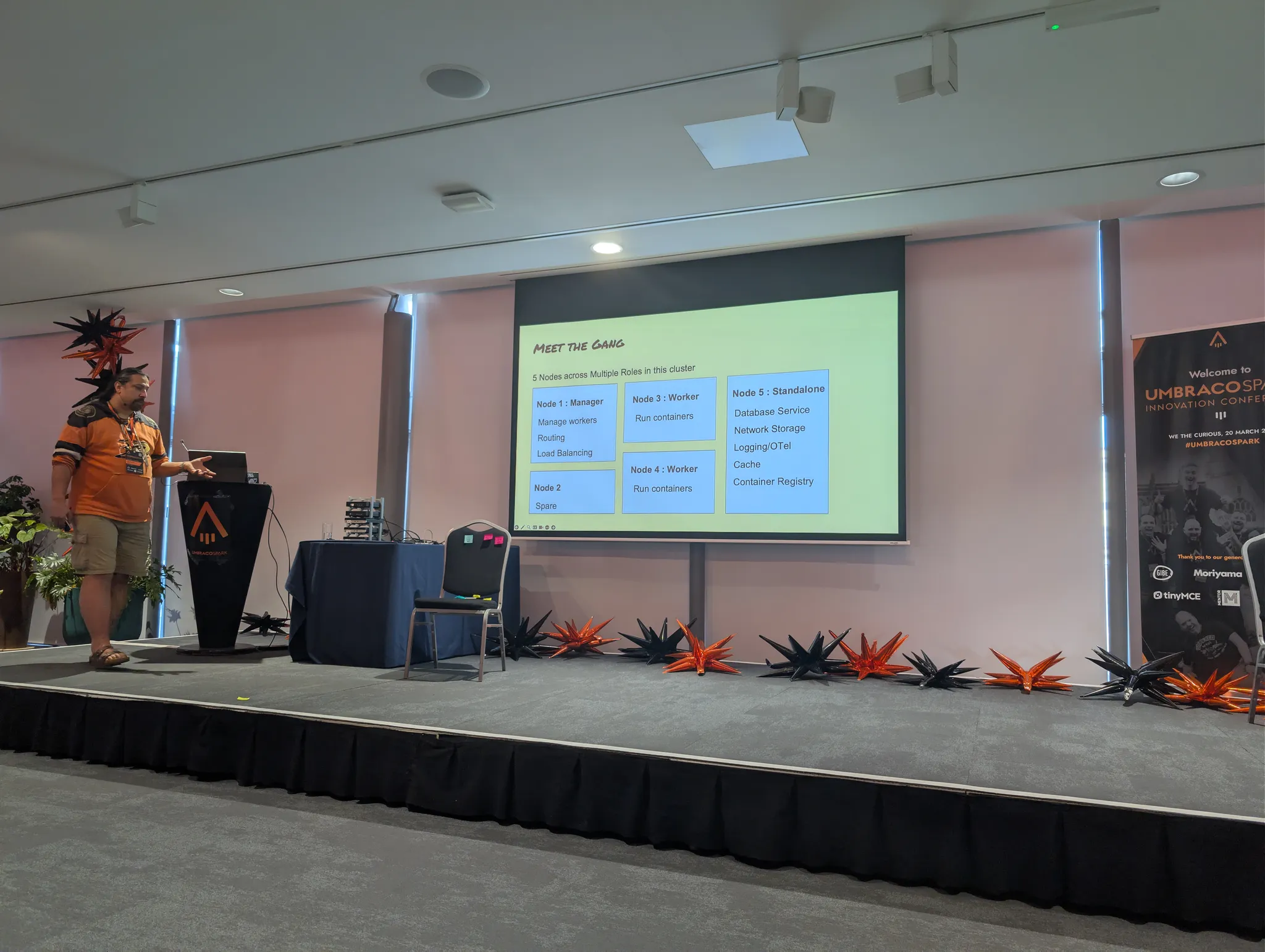
Carl brought a cluster of mini-computers and some networking magic* to the stage and attempted to replicate a live, load-balanced cloud environment. Genuinely one of the most ambitious live demos I’ve seen at a conference.
The talk covered how modern Umbraco can be hosted in Linux and used Docker Swarm to demonstrate scaling and load balancing concepts in a very hands-on way.
*Sadly the live demo hit a wall when it turned out there was no internet access on stage but the concept was brilliant and it sparked a lot of good conversation.
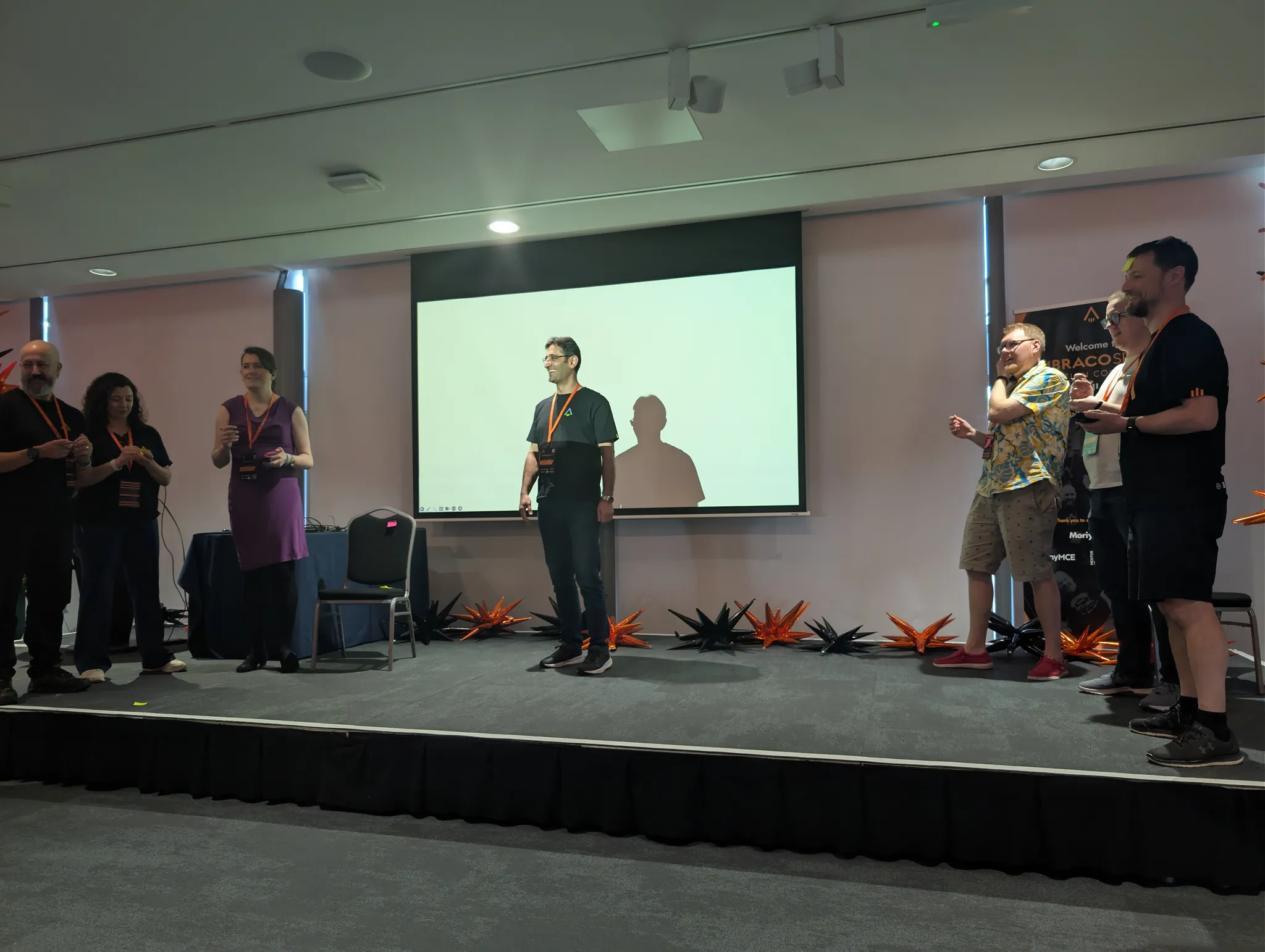
Can AI Build an Accessible Tool If You Only Write the Spec?
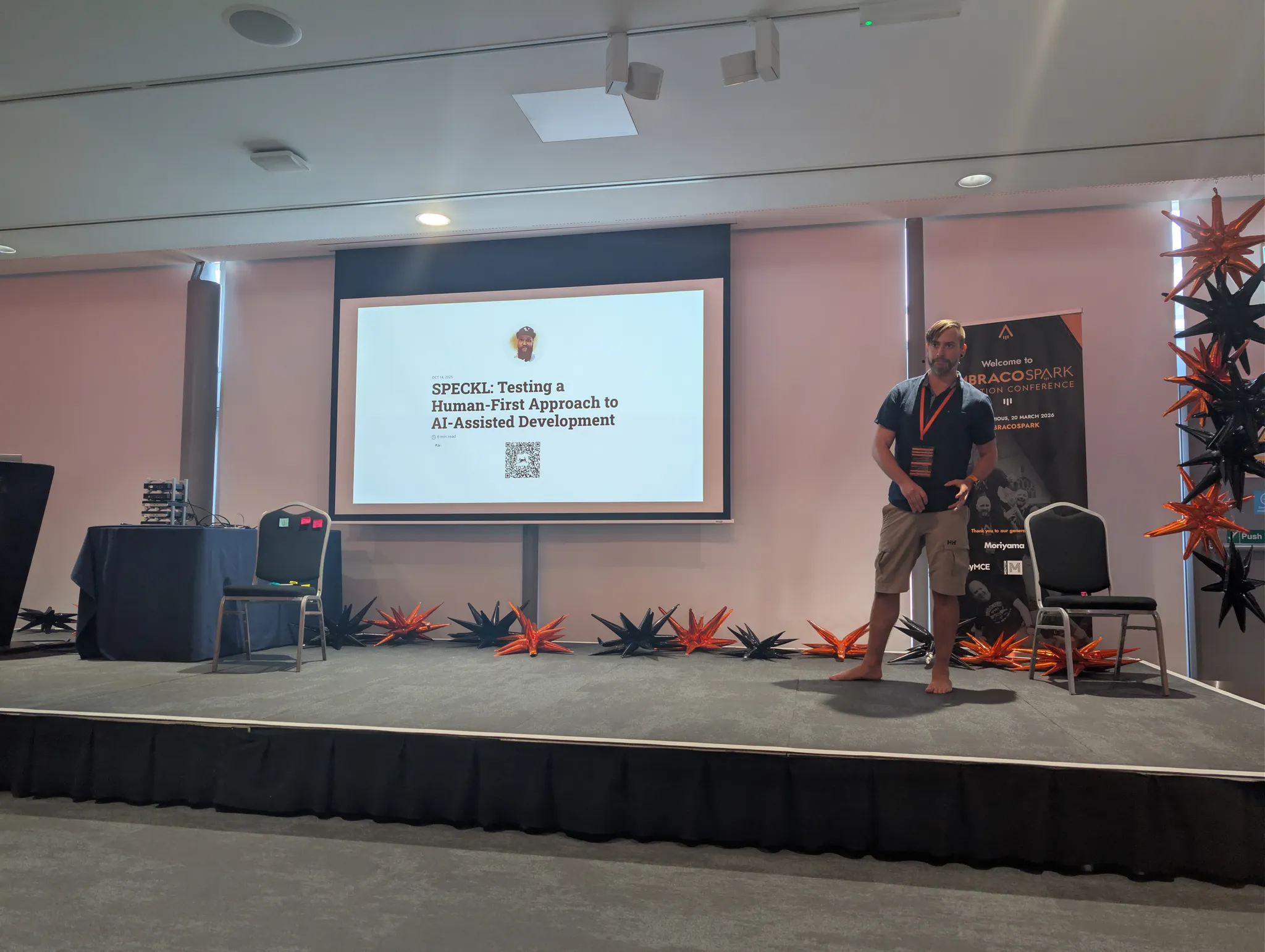
A lightning talk, but a memorable one. Mike ran an experiment: could he build an accessible brand colour contrast checker by writing specifications rather than code by using Claude Code and Speckl?
The results were convincing, AI handled the accessibility-focused specs, automated testing and WCAG contrast calculations well. Where it struggled was UX polish, visual judgement and progressive enhancement. This highlighted to me the kind of nuanced decisions that still need a human eye.
As someone who uses AI tooling regularly in my own workflow, this was an honest and useful take on where spec-driven AI development works and where it falls short.
📄 Resources: Slides
A Website, an Email, and an AI Summary Walk into a Bar…
Georgina Bidder & Matt Sutherland
This talk introduced Generative Engine Optimisation (GEO): the practice of preparing your content and data for AI-driven search, not just traditional search engines.
The case study at the centre highlighted the real risk of data inconsistencies across multiple sources when AI is summarising your products. Struct was used as a source of truth to counteract hallucinations and unreliable product data being surfaced by AI tools.
This one genuinely got me thinking about how we build websites going forward. The Agentic Web is coming and it’s worth considering now how your content strategy holds up when an AI is doing the reading.
Much Ado About Nothing
A talk about null, 0, NaN, string.Empty and all the ways we represent nothingness in software.
This was one of those talks that reminds you why conferences aren’t just about the latest framework updates. It was funny, thought-provoking and genuinely made me reconsider some assumptions I hold about how I model “nothing” in code. One of the highlights of the day for me.
What’s Next in the Backoffice
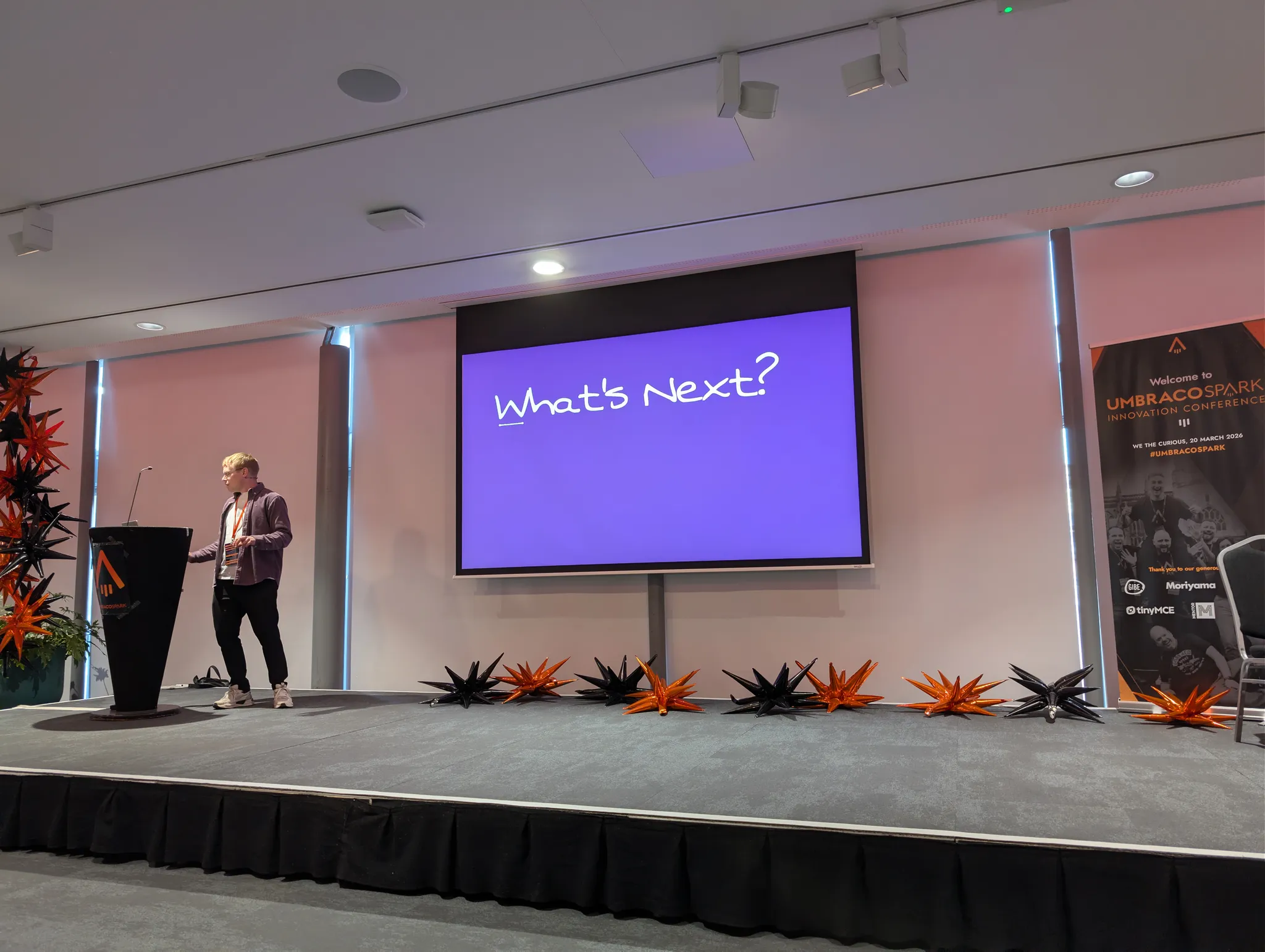
With the major backoffice transformation now behind us it feels that Umbraco is turning its attention to refining the editor experience.
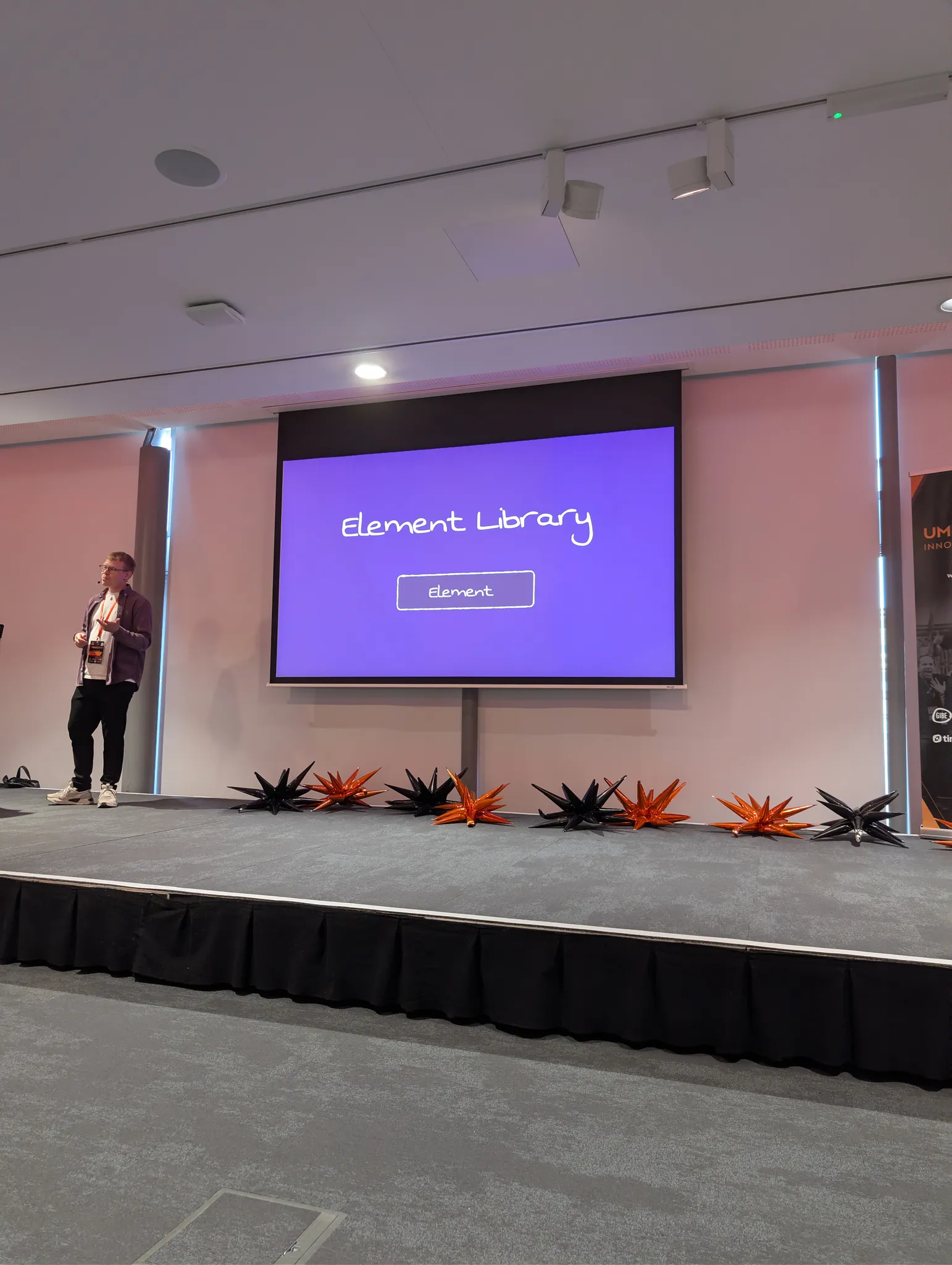
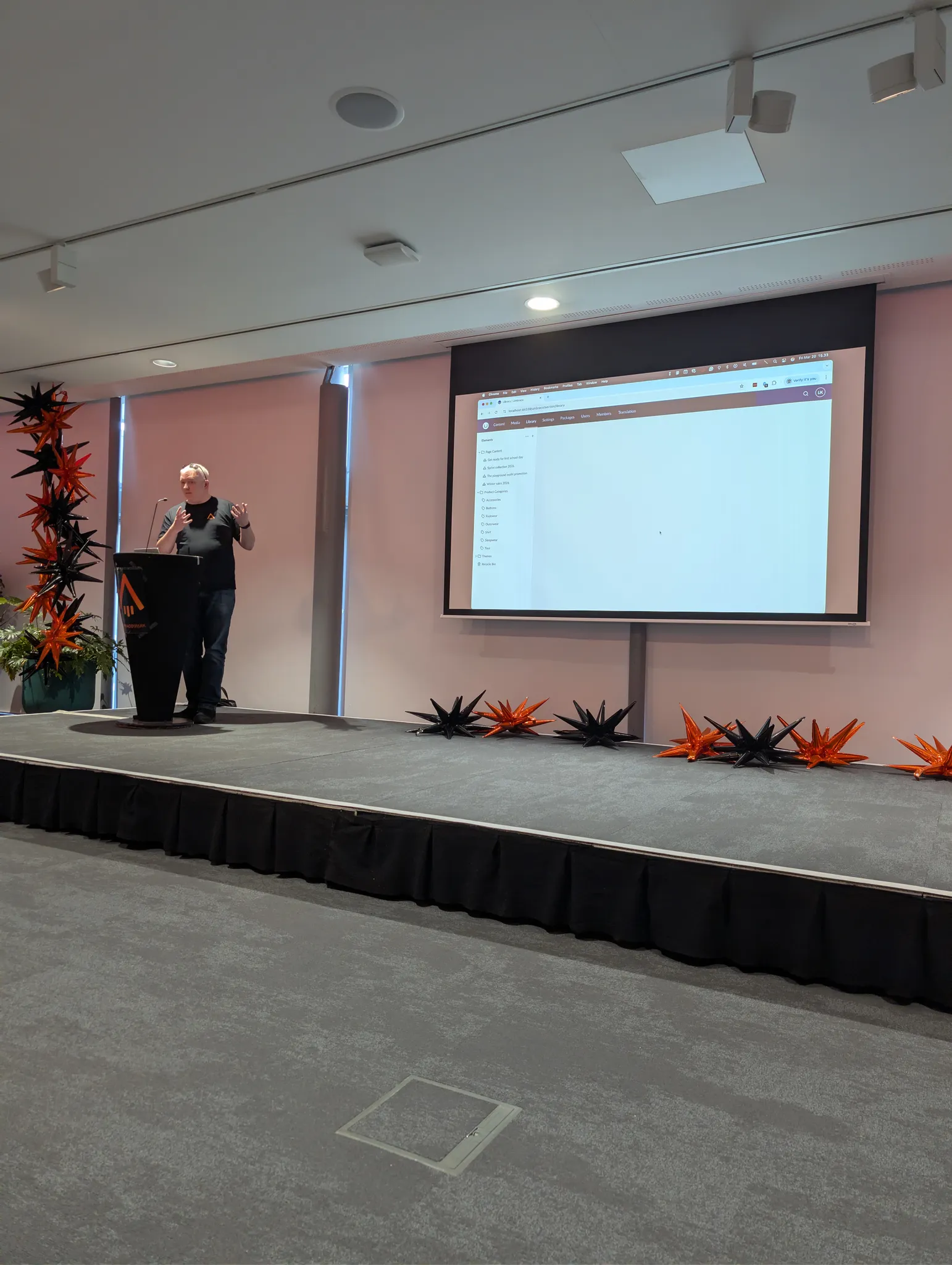
We had a preview of the upcoming Element Library, which lets you move block-level content into a shared repository for reuse across the site. There were also wireframes and live work-in-progress demos of content diff views, rollback, variant handling and basic concurrent user support.
One small visual detail worth noting: anything that acts as a “reference” in the new system will be highlighted in purple. It’s a small touch, but it’ll make navigating content relationships a lot clearer.
Package Awards
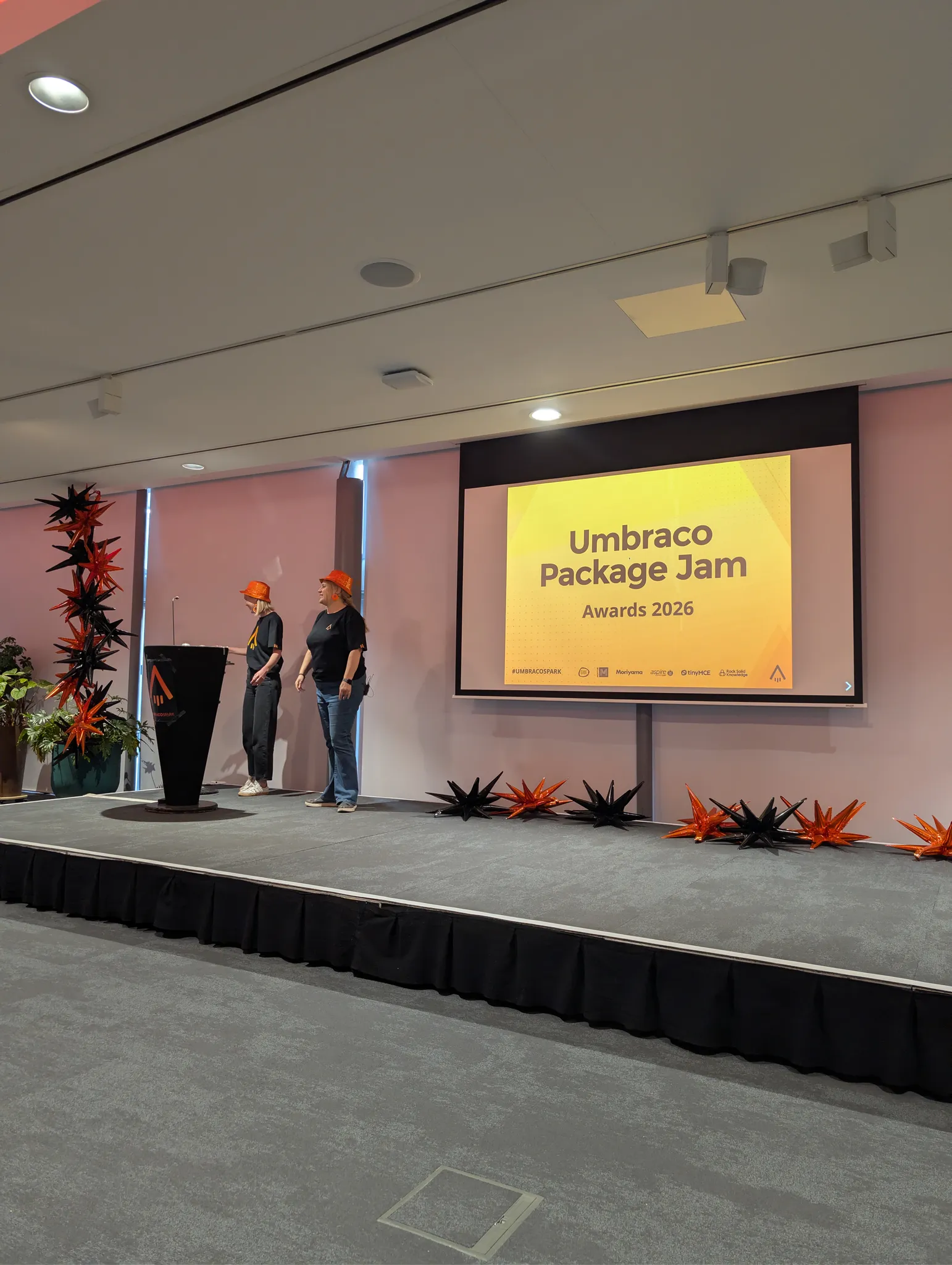
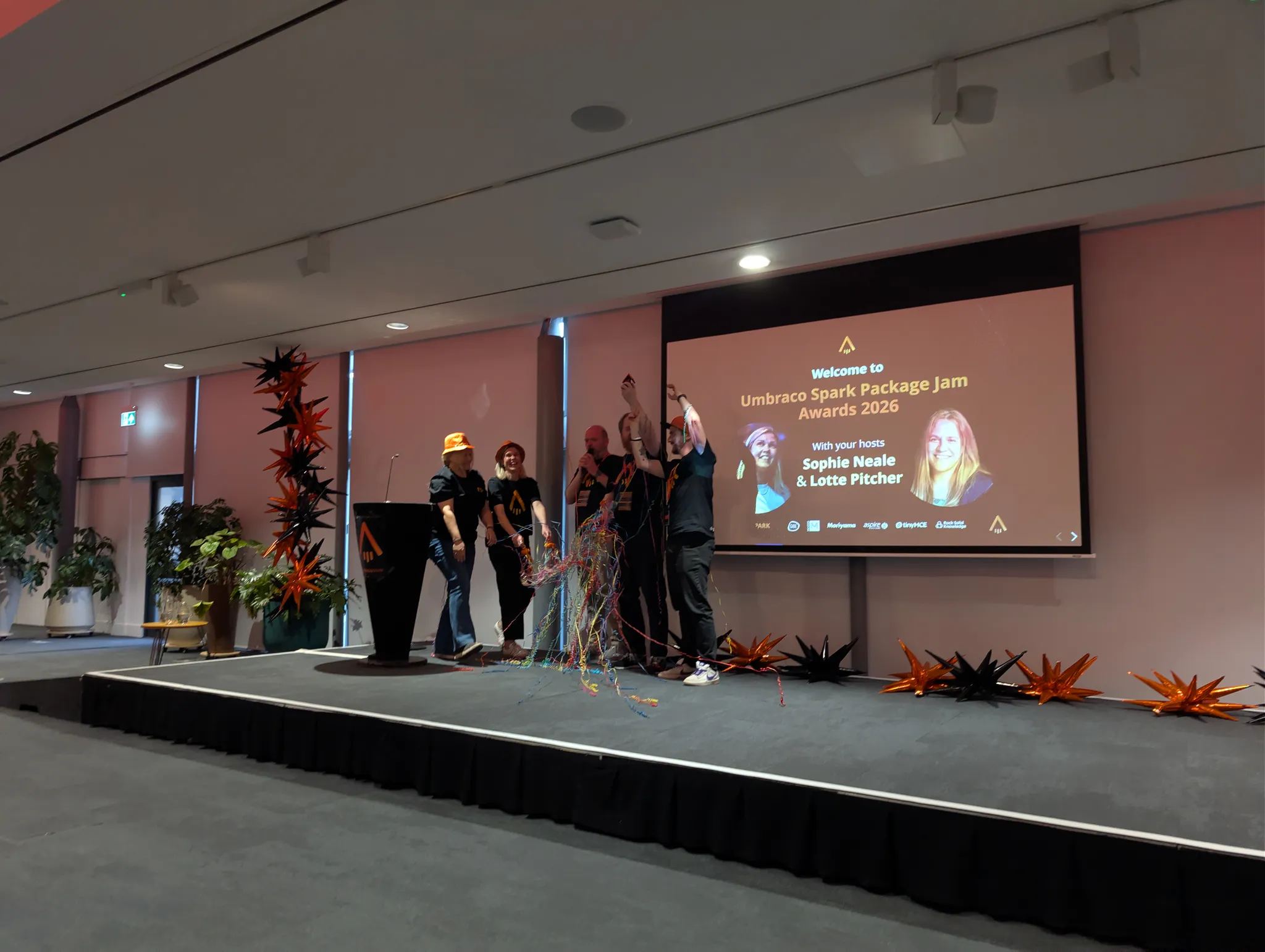
Presented by Lotte Pitcher & Sophie Neale
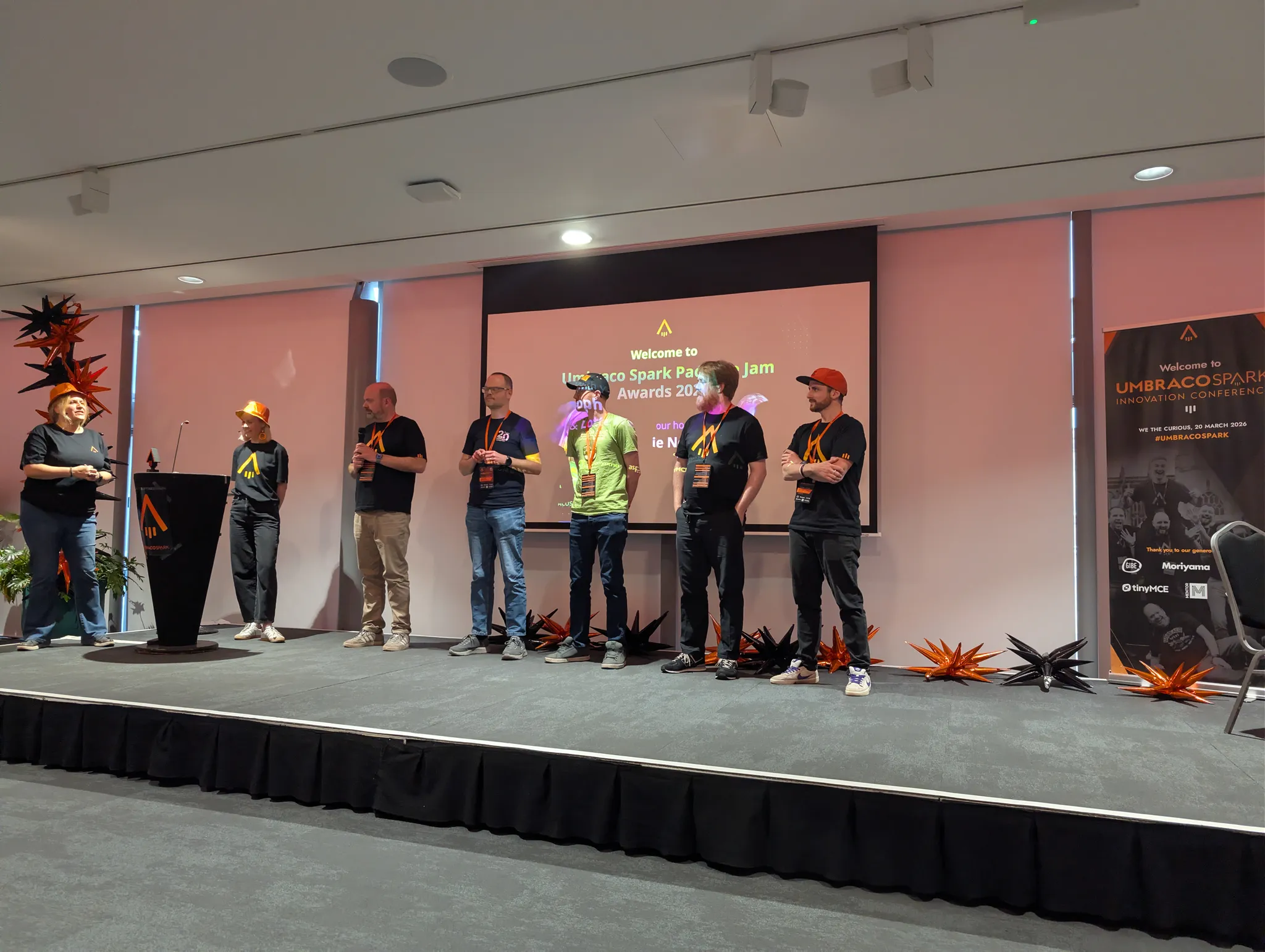
The day wrapped up with the Package Jam awards showcasing what attendees had built during the previous day’s package jam. The creativity on display was brilliant.
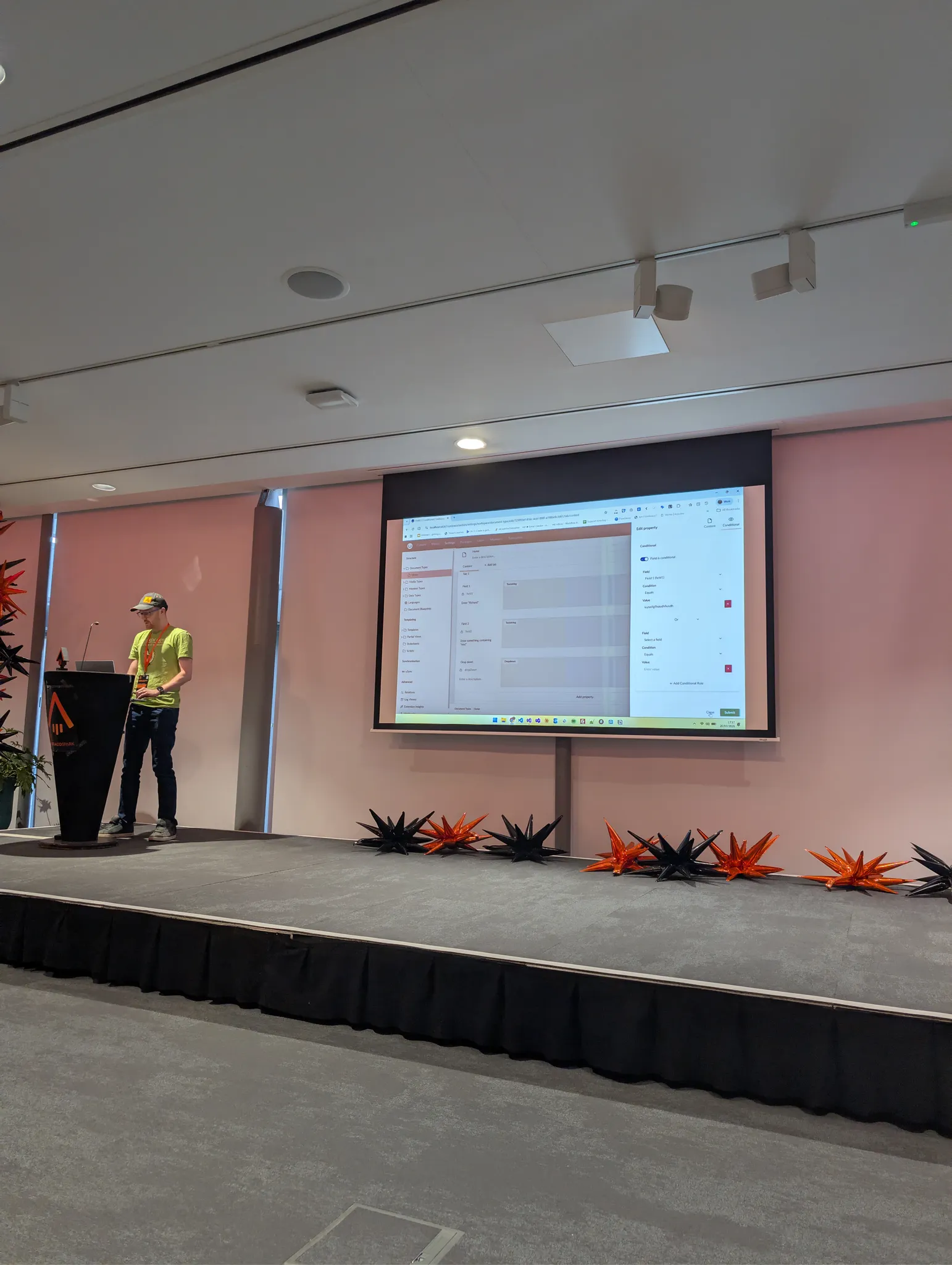
Some standout entries used AI in genuinely useful ways including automatically labelling properties based on wider data structure context, changing icons for document types, and a URL-to-content importer. There was also a “Favourites” feature for quick-access content in the backoffice, which honestly feels like something that should be in core.
On the fun end of the spectrum: a package to gamify the backoffice by awarding points for content creation and other CMS actions. I know I’d install it…
Takeaways
A brilliant day in Bristol. A few things I took away with me:
- AI is being introduced into Umbraco thoughtfully
- The attention to backoffice improvements are exciting
- Community investment pays off - the Umbraco community is one of the platform’s biggest assets.
Thanks to the organisers at Gibe Digital for another fantastic event. Already looking forward to Spark 2027. 🦄

Comments & Feedback