For a long time, the map for my open source Umbraco packages was scattered. Knowledge was often tucked away in basic text files, various code repositories, or older blog posts. Today, that journey of consolidation is complete. I am thrilled to invite you to the new home for every piece of technical guidance I have created: docs.jcdc.dev.
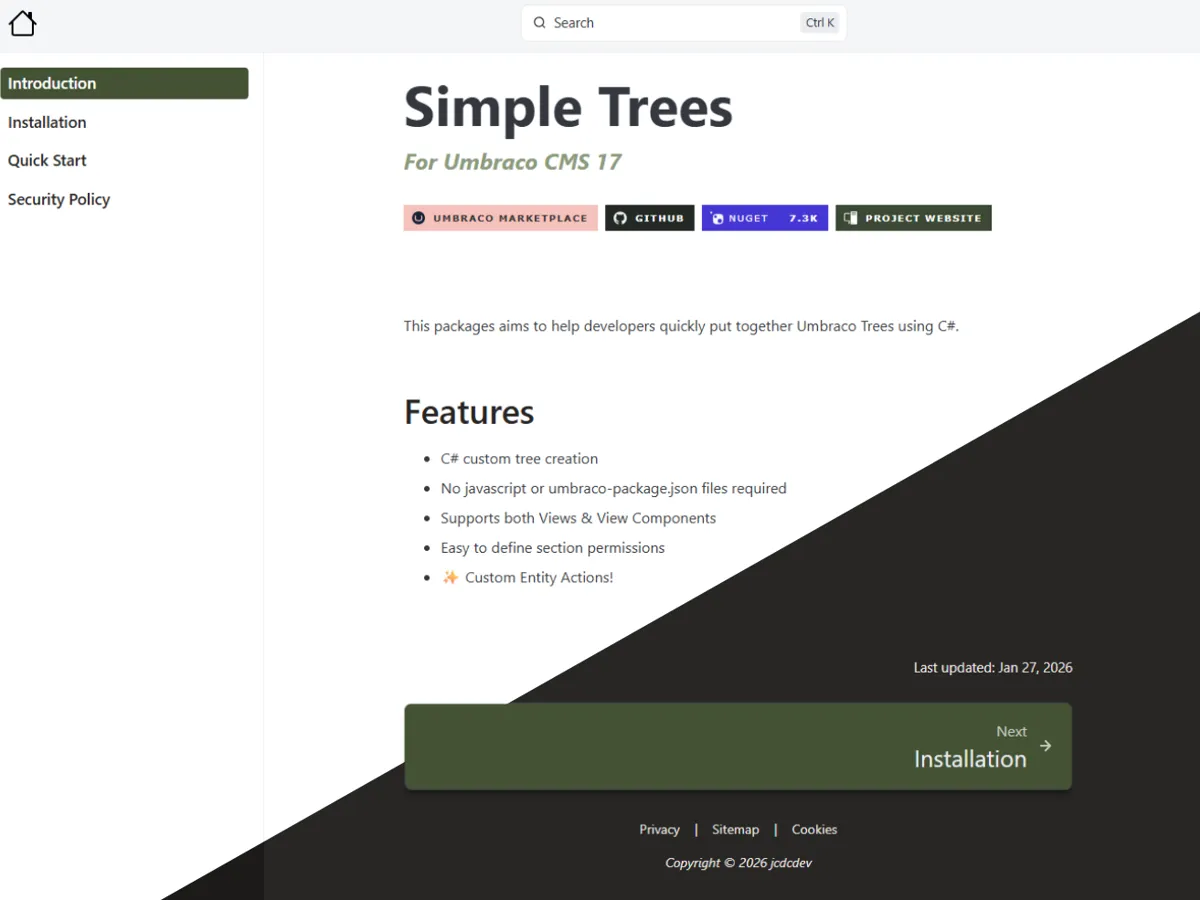
A good friend of mine (non-technical) describes software development as magic, we’re casting spells. A key driver behind my work is to offer free and easy to use Umbraco CMS packages that deliver value and feel almost magical. Part of achieving this goal is to ensure there is clear documentation, spanning across all supported and historical versions of my work.
Whether you are looking for the latest integration tips for my Umbraco 17 packages or digging for legacy support on End of Life (EOL) versions, the information is now in one place.
Built for speed and efficiency
Blazing Performance
Instant page loads so you can find your answer and get back to coding without delay.
Precision Search
A robust site-wide search that cuts through the noise.
Serverless Efficiency
As a purely static site, there is no server-side rendering required. Pages are pre-built, meaning zero server load during your visit and a significantly improved load time over conventional server-side stacks.
Low Carbon Impact
Starlight’s own research, demonstrates a significantly lower environmental footprint compared to other popular documentation technologies.
Automated Synchronisation
To ensure the documentation is always the source of truth, I have engineered a robust flow of information. The site pulls Markdown files directly from each GitHub package repository which is then enriched using CMS data from this website using the Umbraco Content Delivery API.
My setup creates an automated synchronisation loop between my main website, the documentation website, GitHub, NuGet and the Umbraco Marketplace. It ensures that when I am updating a feature list in the CMS or refining a technical guide in a repository, the changes propagate across the ecosystem without duplicate effort.
Open source documentation
As the source for the documentation itself is contained in GitHub it is entirely possible for anyone to contribute back!
Look out for pages with an edit link at the bottom ⬇️

This is just the start
I plan to audit documentation across all projects in the coming months and will create issues on GitHub to track progress. Please reach out to me if you have any thoughts on my approach to documentation. I could really do with some feedback!
I would love to do a meetup talk about this if there’s any interest.
Comments & Feedback